If you’ve ever stood on a steel production floor and watched molten metal flow, or held a piece of steel that didn’t buckle under pressure, you’ve interacted with ferro manganese—one of the unsung workhorses of modern manufacturing. For nearly two decades, I’ve supplied high-grade ferro manganese to steel mills, construction firms, and industrial component makers, and I’ve seen firsthand how skipping this material for lower grades can turn a good product into a costly headache. When people ask me why we insist on high-grade ferro manganese over cheaper alternatives, I don’t just rattle off specs—I talk about the differences that don’t show up on a price tag. Ferro Manganese
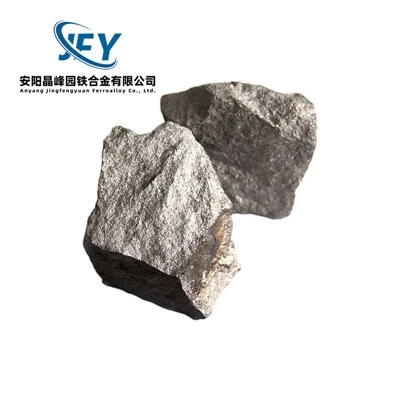
First, let’s cut through the jargon: high-grade ferro manganese is an alloy made from manganese ore, iron, and minimal impurities, typically containing 78–82% manganese, less than 2% carbon, and trace amounts of sulfur and phosphorus that measure in parts per million. Lower grades? They often carry 5–10% carbon and higher levels of sulfur and phosphorus, which might look attractive on a surface-level quote, but create hidden costs at every stage of production. For steel manufacturers, that difference isn’t just technical—it’s the line between a batch that meets international standards and one that gets rejected mid-process.
The biggest advantage of high-grade ferro manganese boils down to its direct impact on steel strength, corrosion resistance, and process efficiency. Manganese itself is a critical deoxidizer and desulfurizer in steelmaking: it binds with oxygen and sulfur, two elements that cause brittleness and cracking in molten steel, to form solid compounds that can be easily removed. Lower-grade alloys, with their higher carbon and impurity content, require more heat to melt, which means longer production cycles, higher energy bills, and a greater risk of leftover impurities seeping into the final steel. I remember a client three years ago who tried to switch to a cheaper 65% manganese alloy to save 10% on material costs; within two months, they were seeing a 15% increase in rejected steel batches due to sulfur-induced cracking. They came back to us for high-grade, and within six months, their reject rate dropped by 12%—savings that far outstripped their initial cost cut.
Corrosion resistance is another make-or-break benefit, especially for steel used in construction, bridges, and automotive parts. Manganese forms a tough, protective oxide layer on steel’s surface that blocks moisture and environmental contaminants from penetrating. High-grade ferro manganese delivers a more uniform layer because its low impurity profile ensures the alloy mixes evenly into the molten steel. Lower grades, with inconsistent manganese content and higher sulfur, create small, uneven spots in the steel’s structure where corrosion can start—spots that turn into costly repairs or failures over time. Last year, a road construction firm working on a coastal highway told me their budget for steel beam replacements had increased by 20% over two years because their previous supplier’s low-grade alloy led to premature rusting. Switching to our high-grade product cut their replacement costs by nearly 18% in the following year.
But the advantages don’t stop at the final product—high-grade ferro manganese also streamlines production, which translates to tangible savings for manufacturers. Its lower carbon content means it melts at a lower temperature, reducing the energy needed to process it into steel. For every ton of high-grade ferro manganese used, mills typically use 8–10% less energy than they would with a lower-grade alloy, according to data from the International Manganese Institute. That might seem small, but for a mill producing 100,000 tons of steel a year, that’s thousands of dollars in annual energy savings. Additionally, trace impurities in high-grade ferro manganese reduce wear on furnaces and tools: sulfur, in particular, can corrode furnace linings, leading to frequent maintenance and downtime. I’ve worked with mills that use our high-grade product to extend their furnace lining life by 15–20%, avoiding costly unplanned shutdowns that can cost tens of thousands of dollars per day.
It’s not just steel, either. High-grade ferro manganese plays a key role in other industrial applications, from aluminum alloys to battery components. In aluminum, manganese adds strength without adding weight, making it ideal for aerospace parts and consumer electronics casings. Lower-grade alloys can introduce impurities that weaken aluminum’s structural integrity, leading to parts that fail stress tests. For battery manufacturers, recent research has shown that manganese alloys act as a stable cathode material for next-generation lithium-ion batteries, and high-grade ferro manganese’s consistent purity is critical for ensuring battery performance and lifespan. A battery maker I supply told me that switching to our high-grade alloy reduced their battery failure rate by 9% and extended their product’s warranty period by six months— a selling point that helped them secure major retail contracts.
I know that when you’re managing a supply chain, every dollar counts. It’s easy to fixate on the upfront cost of materials, but I always tell clients to look at the full lifecycle. High-grade ferro manganese might cost a bit more per ton, but the savings from lower reject rates, reduced energy use, longer equipment life, and fewer product failures add up quickly. For small to mid-sized manufacturers, that can mean the difference between staying competitive and falling behind; for large industrial firms, it can translate to millions in annual savings.

Of course, high-grade ferro manganese isn’t a one-size-fits-all solution. It’s tailored to specific applications, and a good supplier will work with you to match the right grade to your needs—whether that’s low-carbon ferro manganese for high-tensile steel, or medium-carbon for structural components. That’s why, as a supplier, I don’t just send out boxes of alloy; I work closely with each client to understand their production processes, their quality standards, and their long-term goals, to ensure they get a product that adds real value, not just a cheap quote.
Carbon Raiser If you’re tired of hidden costs, product failures, and production inefficiencies from low-grade ferro manganese, it’s time to connect with someone who understands the ins and outs of this critical alloy. Let’s talk about your needs, share data on how high-grade ferro manganese can improve your bottom line, and find the right solution for your operation.
References
- International Manganese Institute. (2022). Global Ferro Manganese Market Report: Quality Standards and Industrial Applications.
- Steel Industry Association. (2021). Impurity Effects on Steel Production Efficiency and Product Quality.
- Journal of Power Sources. (2023). Manganese Alloys as Cathode Materials for Next-Generation Lithium-Ion Batteries.
- Construction Materials Journal. (2022). Corrosion Resistance of Alloy-Steel Combinations in Coastal Environments.
- Industrial Furnace Maintenance Quarterly. (2021). The Impact of Alloy Impurities on Furnace Lining Lifespan.
Anyang Jingfengyuan Ferroalloy Co., Ltd.
As one of the most professional ferro manganese manufacturers and suppliers in China, we’re featured by quality products and good price. Please rest assured to buy bulk ferro manganese in stock here and get quotation from our factory. We also accept customized orders.
Address: Longquan Town Industrial Park, Long’an District, Anyang City, Henan Province
E-mail: Jingfengyuan@jfyferroalloys.com
WebSite: https://www.jfy-ferroalloy.com/
