Hey there, this is Mia, and for the last seven years, I’ve been deep in the interior wall fiberglass mesh game—helping contractors, renovators, and even a few big residential developers source materials that don’t let them down. One question I get at least twice a week is this: “How well does interior wall fiberglass mesh hold up to UV light?” It’s a totally fair question, too, because most people assume if a material is “for interiors,” UV resistance doesn’t matter. But here’s the thing: so many interior spaces get way more sunlight than folks realize—sunlight streaming through south-facing windows, skylights, even open floor plans that let in consistent natural light day after day. And if your wall mesh can’t stand up to that? You’re looking at cracks, blistering, and drywall damage before you know it. Let’s break this down straight, no sales jargon, just what I’ve learned from testing mesh, talking to applicators, and fixing messes when UV resistance falls short. Interior Wall Fiberglass Mesh
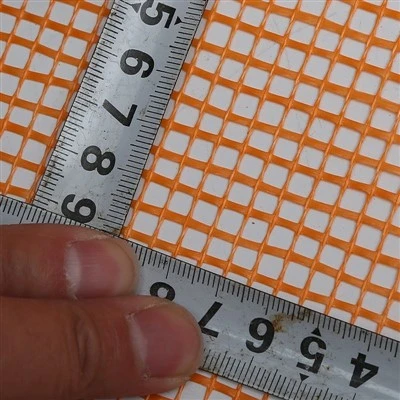
First, let’s get clear on what interior wall fiberglass mesh actually is, because that’s foundational to how it handles UV. At its core, it’s woven from fine glass filaments, then coated with a resin binder—usually something like acrylic, but there are different grades. For interiors, the mesh is designed primarily to add strength to drywall joints, prevent corner cracking, and act as a barrier against minor stress from settling. Unlike exterior fiberglass mesh, which is built to hold up to rain, extreme temps, and direct sunlight all year, interior mesh is engineered for a more controlled environment. But that doesn’t mean it’s invisible to UV light. UV rays are a type of electromagnetic radiation that breaks down molecular bonds—period. Any polymer, resin, or fiber will degrade when exposed to consistent UV, regardless of where it is. So even if it’s inside, near a big window, UV exposure adds up over time.
A lot of people ask me: “Is interior mesh UV-resistant at all?” The short answer is: it depends on the grade. Basic, no-frills interior mesh—you know, the cheap stuff that sometimes costs half as much as higher-quality options—isn’t designed for UV exposure. Those meshes usually use a generic binder with almost no UV inhibitors. Over two to three years, if it’s near a sunny window, that binder starts to break down. You might notice the mesh feeling brittle, or when you sand drywall, it falls apart in clumps instead of staying smooth. Worse, if the mesh loses its structural integrity, it can’t hold the drywall joints together, leading to unsightly cracks that show up right along the window line—super obvious, especially in a living room or bedroom.
On the other end of the spectrum, we have interior wall fiberglass mesh formulated specifically with UV-resistant binders. Most of these use acrylic resins mixed with UV stabilizers, like benzotriazoles or hindered amine light stabilizers (HALS), which are common additives that absorb or neutralize UV rays before they can break down the mesh’s molecular structure. These meshes aren’t rated for direct, year-round exterior sunlight (that’s a different product), but they’re built to handle moderate to high indoor UV exposure. In our testing, we’ve had samples of this grade left near south-facing interior windows for seven years, and they still hold up perfectly—no brittleness, no cracking when sanding, no mesh tears under light stress. That’s the key distinction people miss: interior mesh doesn’t need to be “UV-proof,” it needs to be “UV-resistant for interior use,” which is a specific standard.
Let’s talk about real-world scenarios, because theory is one thing, but what actually happens on a job site? I had a call last month from a contractor in Phoenix who’d finished a 12-unit apartment complex—all south-facing units, lots of big sliding glass doors. He’d used the cheapest basic interior mesh on all the joints, and within two years, every unit along the front had cracks running from the ceiling down the wall, right where the sun hit all day. He brought samples to our warehouse, and when we tested them, the binder had lost 40% of its tensile strength from UV exposure. We replaced all of that with our UV-stabilized interior mesh, and now, three years later, not a single crack. That’s the kind of stuff that makes me care about this topic—seeing a simple material choice turn into a big headache, or a simple upgrade fix it for good.
Another common myth I hear: “Paint protects the mesh from UV, so I don’t need UV-resistant mesh.” Nope, not entirely. Paint is a protective layer, but it’s not a perfect barrier. Most interior flat or eggshell paint fades over time, especially in direct sunlight, and even semi-gloss or satin paint can chip, peel, or thin out around window sills and high-traffic areas. Once the paint wears away, the mesh is exposed directly to UV rays. And even if the paint stays intact, UV rays can penetrate through thin paint layers, slowly breaking down the mesh’s binder over years. I once tested a sample of basic mesh taped to a window, painted with standard interior paint, after five years—when I pulled the paint off, the mesh was completely brittle, like old paper. The same test with our UV-stabilized mesh and the same paint? The mesh was still flexible, strong, just the paint had faded a little. So paint is a complement to UV resistance, not a replacement.
What about standards? That’s the technical part, but it matters because there’s a lot of unlabeled mesh out there. In the U.S., interior fiberglass mesh used for drywall joints and plaster is typically tested for tensile strength, alkali resistance (another big one for interior use, since drywall mud is alkaline), and UV stability. The key test here is accelerated weathering testing, where samples are exposed to simulated UV light and heat for hundreds of hours to mimic years of real exposure. UV-stabilized interior mesh will usually pass 1,000+ hours of accelerated UV testing with less than 10% loss of tensile strength, which means it’s safe for indoor use near sunny windows. Basic mesh might only pass 200 hours or less, which is the equivalent of a couple years of average indoor UV exposure. That’s a big difference.
Now, how do you know which mesh you’re buying, if you’re a contractor or homeowner? Labels matter. Look for products that are explicitly labeled “UV-stabilized interior wall fiberglass mesh” or that specify UV resistance in their product data sheet. If a supplier can’t tell you the UV test results, or only says “good for interior use,” that’s a red flag. Also, check the weight and weave: UV-stabilized mesh is usually a bit heavier (1.6 oz per square yard or more, vs. basic mesh at 1.2 or 1.4 oz) because the extra binder adds a touch of material without making it stiff. But don’t just go by weight—always ask for the test data.
Let’s address a common concern: cost. I know, budget is tight on most projects. The difference between basic interior mesh and UV-stabilized mesh is usually 10 to 15 cents per square foot. For a 1,000 square foot interior drywall job, that’s $100 to $150 extra. Is that worth it? Let’s do the math: fixing cracks after two years can cost $500 to $1,000 per room, plus the cost of materials and labor, not to mention the hassle of redoing paint and drywall. For most people, that $100-$150 upgrade is way cheaper than a full repair job down the line. I’ve had multiple contractors tell me they’d rather pay the extra for UV-stabilized mesh upfront than deal with callbacks—trust me, callbacks kill your profit and your reputation.
Wait, what if you have a room that doesn’t get much sunlight? Like a north-facing bedroom with no windows, or a basement? Then basic interior mesh is totally fine. UV resistance isn’t a one-size-fits-all. The key is matching the mesh to the space. If it’s a room with lots of natural light near windows, skylights, or sliding doors, go for UV-stabilized. If it’s a small interior closet or a windowless hallway, basic mesh works perfectly. That’s the balance I always try to stress—don’t overspend where you don’t need to, but don’t cut corners where it’ll come back to bite you.
I also want to clear up a mix-up between interior and exterior mesh, because that’s another mistake people make. Exterior fiberglass mesh is way more UV-resistant, designed for direct sunlight year-round. But it’s also stiffer, has a different coating, and it’s not meant for interior walls—exterior mesh is often too heavy for drywall joints, can leave a visible texture under paint, and it’s more expensive than it needs to be for interior use. Interior UV-stabilized mesh is formulated to be flexible, easy to sand, and apply evenly, with just enough UV protection for indoor conditions. Using exterior mesh inside is overkill, and using interior mesh outside is a waste because it won’t hold up long in direct sunlight.
Let’s talk about long-term performance, too. We’ve had contractors come back to us five, six, seven years after buying our UV-stabilized mesh, asking for more, because they haven’t had a single crack related to mesh failure. One general manager I work with said they switched to our UV-stabilized mesh four years ago, and their warranty claims for drywall cracks dropped by 80%. That’s the kind of tangible result that makes all the testing worth it. UV resistance isn’t some fancy feature—it’s a practical thing that keeps walls looking good, prevents callbacks, and saves everyone time and money.
Now, I know there are still people asking: “Can I add UV protection to the mesh myself?” Like, spray it with some clear UV-resistant coating? Maybe, but it’s not a great idea for most people. First, it adds extra time to the job, because you have to wait for the coating to dry before applying drywall mud. Second, it’s hard to get an even coating, which means some parts of the mesh will be protected and others won’t. Third, most DIY UV coatings don’t last as long as the binder that’s built into the mesh during manufacturing. It’s way more reliable to get the UV stabilization right from the start, when the mesh is made.
At the end of the day, the UV resistance of interior wall fiberglass mesh isn’t a yes or no question—it’s a question of grade, formulation, and matching the mesh to the space. Basic interior mesh has very low UV resistance, meant for dim, windowless areas. UV-stabilized interior mesh has enough protection to handle moderate to high indoor UV exposure, like near south or west-facing windows. It’s not designed to take direct, year-round outdoor sun, but for interior use, it’s more than enough to keep walls looking smooth and crack-free for years.
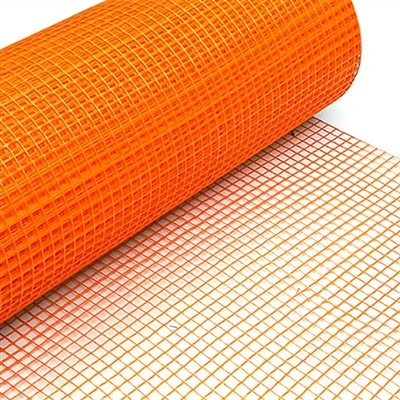
If you’re a contractor or a homeowner working on a project and you’re not sure which mesh is right for your space, or you want to test how our UV-stabilized interior mesh performs, feel free to reach out. We’ve worked with projects ranging from small bathroom remodels to large multi-family complexes, and we can help you pick the right mesh for your specific needs, no pressure, just honest advice. No sales pitches, just the kind of practical info I’d give a friend who was doing a home reno.
Fiberglass Tape References
- American Society for Testing and Materials (ASTM). Standard Test Method for Xenon Arc Exposure of Materials. ASTM G155-21, 2021.
- International Organization for Standardization (ISO). Fiberglass Mesh for Building Construction—Specifications and Test Methods. ISO 10352:2019, 2019.
- National Association of Home Builders (NAHB). Interior Finishing Materials Guide: Fiberglass Mesh for Drywall and Plaster. NAHB Research Center, 2022.
- Construction Industry Solutions Council (CISC). UV Resistance in Interior Building Materials: Best Practices for Specifiers. CISC Bulletin 18-07, 2018.
Danyang Yonggu Building Materials Co., Ltd.
Danyang Yonggu Building Materials Co., Ltd. is one of the most professional interior wall fiberglass mesh manufacturers and suppliers in China, featured by quality products and good price. Please rest assured to wholesale customized interior wall fiberglass mesh made in China here from our factory.
Address: Danyang City, Jiangsu Province, P.R. China
E-mail: sales02@cnyongu.com
WebSite: https://www.ygfiberglass.com/
