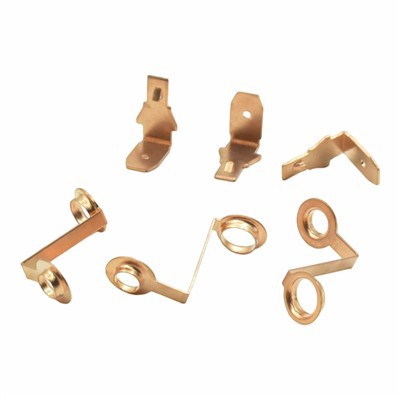
As a supplier of hardware fittings, I’ve witnessed firsthand the profound impact that temperature can have on these essential components. In this blog, I’ll delve into the various effects of temperature on hardware fittings, drawing from my years of experience in the industry. Hardware Fittings
Thermal Expansion and Contraction
One of the most significant effects of temperature on hardware fittings is thermal expansion and contraction. All materials expand when heated and contract when cooled, and this principle applies to hardware fittings as well. The magnitude of expansion or contraction depends on the coefficient of thermal expansion (CTE) of the material. Different metals have different CTE values; for example, aluminum has a relatively high CTE compared to steel.
When hardware fittings are exposed to high temperatures, they expand. This can lead to issues such as loosening of connections. If a bolt and nut assembly is tightened at a normal temperature and then subjected to high heat, the bolt may expand more than the nut, causing the connection to become loose. This is particularly critical in applications where a secure connection is essential, such as in machinery or structural components.
Conversely, when hardware fittings are exposed to low temperatures, they contract. This contraction can cause parts to become too tight, potentially leading to stress fractures or even breakage. For instance, in cold climates, the contraction of metal pipes can cause joints to fail, leading to leaks.
Material Properties and Strength
Temperature also has a significant impact on the material properties and strength of hardware fittings. As the temperature increases, the strength of most metals decreases. This is because heat causes the atoms in the metal to vibrate more vigorously, which can disrupt the crystal structure and reduce the material’s ability to withstand stress.
For example, high – temperature environments can cause steel to lose its hardness and strength. In extreme cases, the metal may become so soft that it can no longer perform its intended function. This is a major concern in industries such as aerospace and automotive, where hardware fittings need to maintain their strength under a wide range of temperatures.
On the other hand, low temperatures can make metals more brittle. When a metal is cooled, its ductility decreases, and it becomes more likely to fracture under stress. This is why in cold regions, hardware fittings need to be made from materials that are specifically designed to withstand low – temperature brittleness.
Corrosion and Oxidation
Temperature can also influence the rate of corrosion and oxidation of hardware fittings. Corrosion is a chemical reaction that occurs when metals react with oxygen and other elements in the environment. High temperatures can accelerate this reaction, as heat provides the energy needed for the chemical reactions to take place more quickly.
In addition, high humidity combined with high temperatures can create an ideal environment for corrosion. For example, in tropical regions where the temperature is high and the air is humid, hardware fittings made of iron or steel are more likely to rust. Oxidation is also a concern, especially for metals such as aluminum. At high temperatures, aluminum can form a layer of oxide on its surface, which can affect its appearance and performance.
Low temperatures can also have an impact on corrosion. In cold environments, moisture can freeze on the surface of hardware fittings, which can cause damage to the protective coatings and expose the metal to further corrosion.
Lubrication and Friction
Temperature affects the performance of lubricants used in hardware fittings. Lubricants are used to reduce friction between moving parts, but their effectiveness can be greatly influenced by temperature. At high temperatures, lubricants can become thinner, which may reduce their ability to provide adequate lubrication. This can lead to increased friction, wear, and tear on the hardware fittings.
Conversely, at low temperatures, lubricants can become thicker and more viscous. This can make it difficult for the lubricant to flow and reach all the necessary parts, also resulting in increased friction and potential damage to the hardware.
Impact on Different Types of Hardware Fittings
Bolts and Nuts
Bolts and nuts are commonly used in various applications to hold parts together. As mentioned earlier, thermal expansion and contraction can affect the tightness of the connection. In addition, high temperatures can cause the threads of the bolts and nuts to wear more quickly, reducing their ability to hold the parts together securely.
Hinges
Hinges are used to allow movement between two parts. Temperature changes can cause the hinge pins to expand or contract, which may affect the smoothness of the hinge operation. High temperatures can also cause the lubricant in the hinge to break down, leading to increased friction and wear.
Springs
Springs are designed to store and release energy. Temperature can affect the elasticity of springs. High temperatures can cause the spring to lose its elasticity, reducing its ability to perform its intended function. Low temperatures can make the spring more brittle and prone to breakage.
Mitigating the Effects of Temperature
As a hardware fittings supplier, I understand the importance of providing products that can withstand the effects of temperature. To mitigate the impact of temperature on hardware fittings, several strategies can be employed.
Material Selection
Choosing the right material is crucial. For high – temperature applications, materials such as stainless steel or heat – resistant alloys can be used. These materials have better heat resistance and can maintain their strength at elevated temperatures. For low – temperature applications, materials with good low – temperature toughness, such as certain grades of steel, should be selected.
Coating and Surface Treatment
Applying protective coatings can help prevent corrosion and oxidation. For example, galvanizing is a common method of coating steel hardware fittings with a layer of zinc to protect it from rust. Other coatings, such as epoxy or powder coatings, can also provide a barrier against environmental factors.
Proper Installation and Maintenance
Proper installation of hardware fittings is essential to ensure their performance under different temperature conditions. This includes using the correct torque when tightening bolts and nuts to account for potential thermal expansion and contraction. Regular maintenance, such as lubrication and inspection, can also help detect and address any issues caused by temperature changes.
Conclusion

In conclusion, temperature has a wide – ranging impact on hardware fittings, affecting their physical properties, performance, and durability. As a hardware fittings supplier, I am committed to providing high – quality products that can withstand the challenges posed by different temperature conditions. Whether you are in the construction, automotive, or any other industry that relies on hardware fittings, it is crucial to consider the effects of temperature when selecting and using these components.
Travel Adapters If you are in need of high – quality hardware fittings that can perform well under various temperature conditions, I encourage you to reach out to me. I have a wide range of products available, and I can work with you to find the best solutions for your specific needs. Let’s start a conversation about your hardware fitting requirements and how I can help you achieve your goals.
References
- Callister, W. D., & Rethwisch, D. G. (2018). Materials Science and Engineering: An Introduction. Wiley.
- ASM Handbook Committee. (2002). ASM Handbook, Volume 1: Properties and Selection: Irons, Steels, and High – Performance Alloys. ASM International.
- Shackelford, J. F. (2019). Introduction to Materials Science for Engineers. Pearson.
Foshan Haosheng Technology Co., Ltd.
As one of the leading hardware fittings manufacturers and suppliers in China, we warmly welcome you to buy advanced hardware fittings made in China here and get pricelist from our factory. All customized products are with high quality and competitive price.
Address: No.4, Jinsha Liansha Shangliang Development Zone Avenue, Danzao Town, Nanhai District, Foshan City, Guangdong Province, China
E-mail: 13925140140@163.com
WebSite: https://www.hssocket.com/
