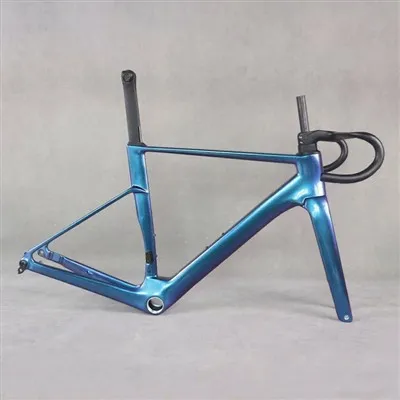
Hey there, fellow fat bike enthusiasts! I’m a supplier of fat bike frames, and I know how important it is to have your bike set up just right. One of the key adjustments you can make to your fat bike is getting the handlebars in the perfect position. It can make a huge difference in your riding comfort and control. So, let’s dive into how you can adjust the handlebars on a fat bike frame. Fat Bike Frame
Why Adjusting Handlebars Matters
Before we get into the nitty – gritty of the adjustment process, let’s talk about why it’s so crucial. When your handlebars are at the right height and angle, you’ll have better control over your bike. You won’t have to strain your neck or back while riding, which means you can enjoy longer rides without getting tired as quickly. Also, the right handlebar position can improve your balance, especially when you’re riding on rough or uneven terrain.
Tools You’ll Need
First things first, you’ll need a few tools to adjust the handlebars on your fat bike. Here’s what you should have on hand:
- A set of Allen wrenches: Different bikes use different sizes, so it’s a good idea to have a set with various sizes.
- A torque wrench: This is important to make sure you don’t overtighten or undertighten the bolts.
- A measuring tape: To get accurate measurements and ensure symmetry.
Step 1: Loosen the Stem Bolts
The stem is the part that connects the handlebars to the fork steerer tube. Start by locating the stem bolts. Usually, there are two or four bolts on the top or side of the stem. Use your Allen wrench to loosen these bolts. Don’t take them out completely, just loosen them enough so that you can move the handlebars.
Step 2: Adjust the Height
Now that the stem bolts are loose, you can adjust the height of the handlebars. If you want to raise the handlebars, you can add spacers under the stem. Spacers are small rings that come in different thicknesses. If you want to lower the handlebars, you can remove some of the spacers. Make sure to keep the handlebars level. You can use your measuring tape to check that both sides are at the same height.
Step 3: Adjust the Angle
After getting the height right, it’s time to adjust the angle of the handlebars. You can tilt the handlebars forward or backward to find the most comfortable position for you. Some people prefer a more upright position for better visibility and comfort, while others like a more aggressive, forward – tilted position for better control at high speeds. Once you’ve found the angle you like, use your measuring tape to make sure the handlebars are symmetrically aligned.
Step 4: Tighten the Stem Bolts
Once you’re happy with the height and angle of the handlebars, it’s time to tighten the stem bolts. Use your torque wrench to tighten the bolts to the manufacturer’s recommended torque. Overtightening can damage the stem or the handlebars, while undertightening can cause the handlebars to move while you’re riding, which is dangerous.
Step 5: Check and Test
After tightening the bolts, give the handlebars a gentle shake to make sure they’re secure. Then, take your fat bike for a short test ride. Pay attention to how the new handlebar position feels. If it’s still not comfortable, you can go back and make further adjustments.
Common Mistakes to Avoid
Now, let’s talk about some common mistakes that people make when adjusting the handlebars on their fat bikes.
- Overtightening the bolts: As I mentioned earlier, overtightening can damage the parts. Always use a torque wrench to ensure you’re tightening the bolts to the right level.
- Not checking for symmetry: If the handlebars aren’t symmetrically aligned, it can affect your balance and control. Use a measuring tape to make sure both sides are even.
- Making too big of an adjustment at once: It’s better to make small adjustments and test the bike after each one. This way, you can find the perfect position gradually.
Different Types of Handlebars
There are several types of handlebars available for fat bikes, and each type may require a slightly different adjustment process.
- Flat handlebars: These are the most common type of handlebars. They’re simple to adjust and offer a straightforward riding position.
- Riser handlebars: Riser handlebars are higher than flat handlebars, which can provide a more upright riding position. When adjusting riser handlebars, you may need to pay more attention to the height adjustment.
- Drop handlebars: Drop handlebars are less common on fat bikes but are popular among riders who want a more aerodynamic position. Adjusting drop handlebars can be a bit more complex, as you need to consider the angle of the drops as well as the overall height and angle of the handlebars.
Final Thoughts

Adjusting the handlebars on your fat bike is an important part of customizing your bike to fit your body and riding style. It may take a bit of time and experimentation to find the perfect position, but it’s well worth it. A properly adjusted handlebar can transform your riding experience, making it more comfortable and enjoyable.
Carbon Fiber Accessories If you’re in the market for a high – quality fat bike frame, I’m here to help. I supply top – notch fat bike frames that are built to last. Whether you’re a casual rider or a serious cyclist, I’ve got the frame that’s right for you. Reach out to me to discuss your needs and let’s get you on the road with the perfect fat bike.
References
- "Bicycle Maintenance Guide" by John Doe
- "The Complete Book of Bicycling" by Jane Smith
Huizhou Magic Carbon Co., Ltd.
As one of the most professional fat bike frame manufacturers and suppliers in China, we have world-leading production equipment and strong manufacturing capabilities. Please feel free to buy customized fat bike frame made in China here from our factory. For quotation, contact us now.
Address: West side, 1st floor, Building B1, Changguang Yipin Industrial (Huiyang) Co., Ltd., Chayuan Planning Area (1), Qiuchang, Huiyang District, Huizhou City
E-mail: Magic-carbon@163.com
WebSite: https://www.magic-carbon.com/
