Hey there! I’m a supplier in the hand lay-up molding business. If you’re in the industry like me or just curious about hand lay-up molding products, you’ve probably wondered about the quality control standards for these items. Well, I’m here to share what I’ve learned and what I follow in my own supply work. Hand Lay Up Molding

What’s Hand Lay-Up Molding Anyway?
First off, let me give you a quick rundown of hand lay-up molding. It’s a process where we manually place layers of reinforcement materials, like fiberglass fabric, into a mold. Then, we wet these layers with a resin, usually polyester or epoxy resin. The resin and reinforcement materials bond together, and after it cures, we get a solid product. It’s a pretty flexible method, allowing us to make products in all sorts of shapes, from small parts to large structures.
Why Quality Control Matters
Quality control is super important in hand lay-up molding. For one, it ensures that the products meet the customer’s requirements. If a customer needs a part with specific strength, durability, or dimensional accuracy, we’ve got to deliver. Also, good quality control helps us avoid costly mistakes and waste. When we make a product that doesn’t meet the standards, we’ve wasted materials, time, and labor. And in the long run, it helps build our reputation as a reliable supplier.
Key Quality Control Standards
Material Selection
The first step in quality control is choosing the right materials. The reinforcement materials, like fiberglass, need to be of high quality. We look at things like the fiber strength, the weave pattern, and the weight of the fabric. For example, a heavier fabric might provide more strength, but it could also make the molding process a bit more challenging.
The resin is another crucial factor. We need to select the right type of resin based on the application. Polyester resin is commonly used because it’s relatively inexpensive and easy to work with. Epoxy resin, on the other hand, offers better chemical resistance and higher strength, but it’s also more expensive. The resin should have the right viscosity, which affects how well it can penetrate the reinforcement fabric. If the viscosity is too high, the resin might not wet out the fabric properly, leading to dry spots in the final product.
Mold Preparation
A well-prepared mold is essential for a quality hand lay-up molding product. The mold surface needs to be clean and free of any contaminants, such as dust, oil, or old release agents. We usually clean the mold with a suitable solvent and then apply a release agent. This helps the finished product come out of the mold easily without any damage.
The mold also needs to be in good condition. Any scratches or dents on the mold surface can transfer to the final product, affecting its appearance and performance. We regularly inspect and maintain our molds to ensure they’re in top shape.
Lay-Up Process
During the lay-up process, we need to pay close attention to several things. First, the layers of reinforcement fabric need to be laid out evenly and smoothly. We use tools like rollers to remove any air bubbles between the layers and to ensure good contact between the fabric and the resin. If there are air bubbles in the product, it can weaken the structure and cause cosmetic defects.
The resin-to-fiber ratio is also critical. If there’s too much resin, the product might be heavy and have poor mechanical properties. On the other hand, if there’s too little resin, the fibers won’t be properly bonded, leading to a weak and brittle product. We carefully measure and mix the resin and hardener according to the manufacturer’s instructions to get the right ratio.
Curing Process
Once the lay-up is complete, the product needs to cure properly. The curing process depends on the type of resin used. Some resins cure at room temperature, while others require heat. We need to control the temperature and humidity during the curing process to ensure a consistent and strong cure.
If the curing temperature is too low, the resin might not fully cure, resulting in a soft and sticky product. If the temperature is too high, it could cause the resin to cure too quickly, leading to internal stresses and cracking in the product. We use temperature sensors and environmental controls to monitor and adjust the curing conditions as needed.
Dimensional Accuracy
The final product needs to meet the specified dimensional requirements. We use measuring tools like calipers, micrometers, and coordinate measuring machines (CMM) to check the dimensions of the product. If the product is out of tolerance, we need to take corrective action. This might involve adjusting the mold or the lay-up process to ensure that future products are within the acceptable range.
Surface Finish
The surface finish of the hand lay-up molding product is also important, especially for products that are visible or have aesthetic requirements. We look for a smooth and defect-free surface. Any scratches, pits, or unevenness can affect the appearance and the functionality of the product. We use sanding, polishing, and other finishing techniques to improve the surface finish.
Testing and Inspection
To ensure that our products meet the quality control standards, we conduct various tests and inspections. We do visual inspections to check for any obvious defects, such as cracks, air bubbles, or surface imperfections. We also perform mechanical tests, like tensile strength tests and flexural strength tests, to measure the strength and durability of the product.
In addition, we use non-destructive testing methods, such as ultrasonic testing and X-ray inspection, to detect any internal defects that might not be visible to the naked eye. These tests allow us to catch any issues early on and make necessary adjustments to the production process.
Continuous Improvement
Quality control is not a one-time thing. We’re always looking for ways to improve our processes and products. We track the quality data of our products, including the number of defects, the results of the tests, and the customer feedback. By analyzing this data, we can identify areas for improvement and take corrective actions.
For example, if we notice that a particular type of product has a high defect rate, we’ll investigate the root cause. It could be a problem with the material, the process, or the equipment. Once we identify the cause, we’ll make changes to the production process to prevent the same issue from happening again.
Wrapping It Up
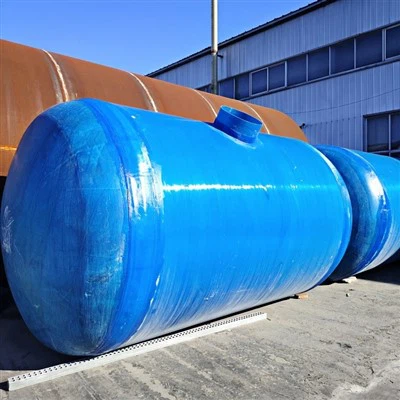
FRP Tanks So, there you have it – the quality control standards for hand lay-up molding products. As a supplier, I know how important it is to follow these standards to ensure that our customers get high-quality products. If you’re in the market for hand lay-up molding products, I’d love to chat with you. I’m confident that with our strict quality control measures, we can provide you with the products that meet your needs and expectations. Whether you’re looking for a one-off custom part or a large production run, we’re here to help. Give me a shout, and let’s start a discussion about your project!
References
- ASTM International standards on composite materials
- Manufacturer’s technical data sheets for reinforcement materials and resins
- Industry publications on hand lay-up molding processes and quality control
Hebei Weihan Environmental Protection Equipment Co., Ltd.
We’re well-known as one of the leading hand lay up molding manufacturers and suppliers in China, featured by quality products and good service. Please rest assured to buy customized hand lay up molding at competitive price from our factory. Contact us for more details.
Address: No. 666 Chuangye Road, Zaoqiang County, Hengshui City, Hebei Province
E-mail: weihanmachine@gmail.com
WebSite: https://www.whanfrp.com/
