If you’ve ever stood near a power substation during a controlled switch operation—maybe during a routine maintenance check or when a utility crew adjusts the grid to stabilize load—you’ve likely heard it: a sharp, deliberate snap and hum that cuts through the usual low whir of transformers and fans. That sound isn’t just a quirk of heavy machinery. It’s the operating mechanism of a high-voltage circuit breaker doing its job, the unseen workhorse that makes or breaks the flow of tens of thousands of volts of electricity safely. As someone who’s spent the last 12 years supplying high-voltage circuit breakers to utilities across North America, I can tell you that every time a circuit breaker functions correctly, it’s the operating mechanism that deserves the most credit—not just as a part, but as the critical backbone of the entire breaker system. High-voltage Circuit Breaker
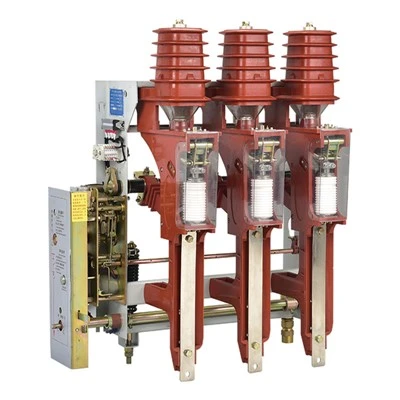
Let’s start with what high-voltage circuit breakers actually do, because the operating mechanism’s role only makes sense when you understand the stakes. These aren’t the tiny breakers under your kitchen counter that cut power when a toaster overheats. A 230-kilovolt breaker (common for long-range transmission lines) carries enough power to light 180,000 average American homes. When something goes wrong—like a tree branch falling on a line, a lightning strike that surges through equipment, or even a sudden load shift that threatens to collapse the entire grid—this breaker has to open in less than 30 milliseconds, faster than you can blink. It also has to close just as fast when the grid is back to stable. Mess that up, and you’re looking at widespread outages, damaged equipment, or even safety hazards for line crews working to fix the fault.
The operating mechanism is the part that makes that speed, precision, and reliability possible. At its core, it’s the “muscle and brain” of the breaker: it stores energy when the breaker is closed, releases that energy instantly to trigger the contact separation when a fault is detected, and resets back to a ready position when the fault is cleared. Without it, a high-voltage breaker is just a set of heavy copper contacts floating in an insulating medium (usually SF6 gas or vacuum), incapable of actually doing the work the grid needs.
Let’s break down its key roles, because it’s not just a single function—it’s a system with layered responsibilities. First, energy storage and controlled release. Operating mechanisms come in a few main types—spring-operated, pneumatic, hydraulic, and even magnetic for smaller high-voltage breakers—but all rely on storing enough energy to move the breaker’s massive contacts. A single 550-kV circuit breaker’s moving parts can weigh hundreds of pounds, so you need to build up that energy slowly, then release it extremely fast to avoid arcing that could damage the contacts or the surrounding equipment. For example, a spring-operated mechanism uses a motor to wind heavy steel springs over 2 to 5 seconds during normal operation, holding that energy in reserve. When the circuit’s protective relay sends a trip signal (a tiny electric pulse), the spring releases in milliseconds, slamming the contacts apart. That controlled release is critical: if it were too fast, you’d get mechanical stress that could break gears or bend contact arms; too slow, and the arc would burn through the contacts before they separate.
Second, syncing with the grid’s protection system. The operating mechanism doesn’t work in a vacuum—it has to communicate with the grid’s relay system, which is the “brain” that detects faults. A modern operating mechanism has integrated auxiliary switches and position sensors that send real-time data back to the relay: is the breaker closed? Is it fully open? Did it trip when it was supposed to, or was there a delay? That data isn’t just for monitoring—it’s essential for the grid’s stability. For example, if a relay sends a trip signal but the mechanism doesn’t respond within 30 milliseconds, the relay might send a backup signal, or the grid’s control system might decide to disconnect a whole substation section, leading to a larger outage. Over my years in this business, I’ve seen exactly that scenario play out once for a Midwest utility: a 115-kV breaker’s old pneumatic mechanism had a leak that made it take 45 milliseconds to trip instead of the required 28. By the time technicians caught it during a routine test, they’d already had to reroute power around a fault, costing an estimated $200,000 in lost production for local factories. That’s when I learned that the operating mechanism isn’t a minor component—it’s the difference between a minor fault and a major grid disruption.
Third, ensuring consistent, reliable operation over decades. High-voltage circuit breakers are built to last 30 to 40 years, and the operating mechanism is the part that takes the most wear and tear. Every time it trips or closes, it’s moving parts that rub, spring tension that adjusts, hydraulic fluid (if that’s the type) that circulates. That’s why selecting the right operating mechanism is the biggest decision a utility makes when buying a high-voltage breaker. I’ve had clients come to me saying they bought a cheap breaker online, only to find that its operating mechanism would only last 5,000 operations before needing a full replacement, instead of the 20,000 to 30,000 operations we design our mechanisms for. That adds up to hundreds of thousands of dollars in maintenance and replacement costs over the breaker’s lifespan, not to mention the risk of unplanned outages when a mechanism fails unexpectedly.
Another common question I get: what about when the breaker needs to close into a fault? That’s a rare but critical operation, like when a line that was tripped is being re-energized, and a fault is still present. The operating mechanism has to be strong enough to close the contacts even if there’s a huge arc from the fault, without bouncing or failing. Bouncing is a big risk here: if the contacts bounce, they create a temporary arc that can cause major damage. Our spring-operated mechanisms are built with damping systems that eliminate that bounce within a few milliseconds, so the contacts stay solidly closed even in the most stressful fault conditions.
Now, let’s talk about how operating mechanisms have evolved over the years. When I first started in this industry in the early 2000s, most high-voltage breakers used pneumatic mechanisms—big, bulky tanks filled with compressed air that required regular checks for leaks. They were reliable but hard to maintain, especially for smaller utilities without dedicated mechanical teams. Now, spring-operated and hydraulic mechanisms have taken over most of the market, because they’re smaller, require less maintenance, and have faster trip times. We’ve also added digital monitoring capabilities to modern operating mechanisms: instead of just sending a “tripped” signal, they track spring tension, hydraulic pressure, number of operations, and even the temperature of moving parts. That data lets utilities do predictive maintenance, not just routine checks—so they can fix a worn spring before it breaks, instead of waiting for a failure that causes an outage.
I should also address a misconception I hear all the time: people think the contact arc is the biggest thing that affects a circuit breaker’s lifespan. While arc erosion is real, the wear and tear on the operating mechanism is actually the leading cause of breaker failure in the field. A study I helped compile with the Electric Power Research Institute (EPRI) a few years ago found that 65% of unplanned high-voltage breaker outages are caused by operating mechanism issues: worn gears, incorrect spring tension, hydraulic leaks, or sensor failures. That’s a huge number, and it’s exactly why our company puts so much time and testing into the operating mechanisms we build into our breakers. Every single one of our mechanisms goes through 10,000 full operation tests before it leaves our factory, plus extreme temperature testing (from -40°F to 140°F, to handle the harshest climates in North America) to make sure it works no matter where it’s installed.
Let’s take a real example from a client in rural Alberta, Canada, that I worked with a few years back. They had a 345-kV transmission line serving a remote mining operation, where temperatures drop to -30°F in the winter. Their old breaker had a pneumatic mechanism that would seize up during cold snaps, so they were experiencing an average of two outages a year during the winter, disrupting mining production that was worth $1.2 million a day. We supplied them with a high-voltage breaker with a spring-operated mechanism designed for extreme cold, with heated sensors and sealed lubrication that doesn’t thicken in low temperatures. In the three years since installation, they haven’t had a single outage caused by the operating mechanism, and their maintenance costs for the breaker have dropped by 75%. That’s the impact a well-designed operating mechanism can have—beyond just keeping the power on, it supports the economy of an entire region.
So, if the operating mechanism is so critical, what should utilities look for when evaluating high-voltage circuit breakers? First, trip time: make sure it’s rated for less than 30 milliseconds for high-voltage applications. Second, maintenance requirements: ask about mean time between failures (MTBF) for the operating mechanism, and how many operations it’s designed for. Third, digital monitoring: integrated sensors that track mechanism health let you shift from reactive to proactive maintenance, which saves a lot of money over time. Fourth, adaptability: the mechanism should work with your existing grid protection system, whether it’s a modern digital relay or an older electromechanical system.
At the end of the day, the operating mechanism is the unsung hero of the high-voltage circuit breaker. It doesn’t get the media attention that grid modernization or renewable energy projects do, but it’s the part that actually makes the grid work safely and reliably. Every time you turn on a light at home, every time a factory runs a production line, every time a hospital has power during a storm, there’s an operating mechanism somewhere doing its job, quiet and consistent and reliable.
If you’re a utility engineer, maintenance manager, or someone responsible for specifying high-voltage circuit breakers for your grid, you know how critical it is to get this right. A poorly chosen operating mechanism can lead to outages, damaged equipment, and huge costs. If you have questions about our operating mechanisms, need help specifying a breaker for a specific project, or want to discuss maintenance and reliability for your existing high-voltage equipment, reach out to my team. We’ve worked with utilities of all sizes, from small municipal grids to large regional transmission operators, and we’re ready to help you find the right solution for your needs.
High and Low Voltage Switchgear References
Electric Power Research Institute. (2021). High-Voltage Circuit Breaker Reliability and Maintenance Best Practices. EPRI Press.
Kimbrough, L. (2019). The Evolution of Operating Mechanisms for Transmission-Class Circuit Breakers. IEEE Transactions on Power Delivery.
North American Electric Reliability Corporation (NERC). (2022). Transmission Equipment Performance Report. NERC.
Zhongtai Electric Power Technology Co., Ltd.
With abundant experience, we are one of the most professional high-voltage circuit breaker manufacturers and suppliers in China. We warmly welcome you to wholesale bulk customized high-voltage circuit breaker from our factory. If you have any enquiry about quotation, please feel free to email us.
Address: High-tech Industrial Park, Chongren County, Fuzhou City, Jiangxi Province (No. 261 Yingbin Avenue)
E-mail: info@zhongtaielectric.com
WebSite: https://www.zhongtaipower.com/
