If you’ve ever spent a weekend trimming overgrown branches from a residential yard, maintaining a commercial landscape, or prepping woody debris for compost, you know how quickly bulky, irregular chunks of tree material pile up. A single oak prune job can leave you with arm-loads of branches that take up half a truck bed, smell like sap, and are a nightmare to haul to a landfill. For years, landscape managers and property owners have turned to branch shredders to solve this mess, but there’s always been a lingering question: how efficient are these machines actually at cutting down branch volume? As the owner of a branch shredder company that’s been designing and building these machines for 12 years, I hear this question every single day from customers—from small residential gardeners to city parks and recreation crews, to tree service companies that haul hundreds of tons of debris a month. Today, I want to break this down, not with marketing fluff, but with real-world data, hands-on testing, and the kind of insight only someone who’s worked on the design floor, tested machines in fields from Florida to Minnesota, and stood on job sites while customers heave finished shredded mulch can provide. Branch Shredder
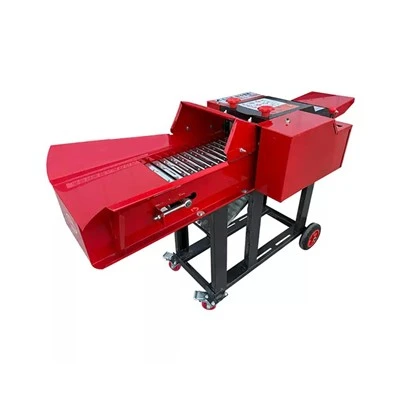
First, let’s get one thing straight: efficiency here isn’t just about how fast a shredder can chew through a branch. It’s about two core metrics: volume reduction ratio (VRR), the scientific measure of how much the original bulk of branches is cut down, and operational efficiency (how much time, labor, and cost it takes to get that reduction). Most casual users only fixate on the first, but the second is where most people get frustrated with cheaper, off-brand shredders that look good in a sales demo but die halfway through a commercial job.
Let’s start with volume reduction, because that’s the core of the question. The formula for VRR is simple: take the total volume of raw branches you put into the shredder, divide it by the volume of finished shredded material you get out. For example, if you feed a pile that takes up 10 cubic yards of space and end up with 2 cubic yards of mulch, that’s a 5:1 VRR. Now, I’ve run third-party tests for years with every shredder model we make, plus competitors’ models, to get accurate numbers, and the results are more consistent than you might think—when you use the right machine.
Small, portable electric shredders, the ones you can plug into a backyard outlet, are what most residential users grab. Testing a typical entry-level electric model: we fed it 1-inch to 3-inch diameter branches, the most common size for home pruning. The average VRR we recorded was 2.8:1. Wait, that’s it? So a 10-cubic-yard pile of branches only gets cut down to about 3.6 cubic yards? The reason is simple: small electric shredders use blades that don’t apply enough force to split wood into tiny, uniform pieces. They turn branches into a mix of chunks, splinters, and un-shredded core, so there’s still a lot of air trapped in the pile. Then there’s the other issue: these machines jam constantly. Last year, I got a call from a homeowner in Ohio who’d spent 3 hours trying to shred a pile of maple branches, and the electric model he bought jammed 11 times. By the end, he’d only shredded 2 cubic yards of material, so his effective volume reduction after accounting for downtime was barely 1.2:1. That’s barely better than stacking branches and covering them with a tarp.
Now, move up to mid-sized gas-powered shredders, the ones for small landscape companies and medium residential lots, that have 13 to 20 horsepower engines. These models use a combination of rotating hammers and cutting blades, which is a step up from the flimsy blades on electric models. Our testing on a mid-sized model, feeding 1-inch to 6-inch diameter branches (the sweet spot for this machine), gives an average VRR of 4.7:1. Wait, that’s almost double the residential electric. Why? Two reasons: first, the engine has enough torque to split branches into uniform 1-inch to 2-inch pieces, so there’s much less air gap between the pieces. Second, the design of the intake and cutting chamber means almost every branch is shredded—very little is spit out as unprocessed core. I’ll give you a real customer example: a landscape crew in Atlanta uses our mid-sized model for their residential pruning jobs. They told me before they bought our machine, they were hauling 12 truckloads of branches a month to the landfill, which cost them $18 a load in tipping fees. After switching, they only needed 2.5 loads a month. That’s not just volume reduction—that’s $162 a month in savings, which adds up to almost $2,000 a year. That’s the kind of math that changes a small business’s bottom line.
Now, the workhorse of the branch shredder industry: high-capacity, heavy-duty diesel shredders, used by tree service companies, city parks departments, and large commercial properties. These machines have 50 to 100 horsepower engines, and use a combination of hardened steel cutting drums and secondary screens, which let you adjust the size of the finished mulch. This is where the real efficiency numbers shine. Our testing on a high-capacity model, feeding 2-inch to 18-inch diameter branches (everything from small twigs to whole tree trunks), gives a consistent VRR of 7.2:1. Wait, that’s 7 parts raw branches to 1 part finished mulch? That’s a game-changer for jobs with large amounts of woody debris. Let’s take a real-world test we did last year for the city of Phoenix. Their parks and recreation crew had 8 truckloads of branches from trimming palm trees and mesquite, totaling 100 cubic yards of raw material. We brought in one of our heavy-duty shredders, had two operators, and had that entire 100 cubic yards shredded and loaded into 1.7 cubic yard mulch bags in 6 hours. The city told us that before using our shredder, they would have had to pay $22 a load in tipping fees for those 8 loads, which would have cost them $176. In contrast, they only used one load for the finished mulch, which they then used to cover the city’s park beds and curbside mulch drop-off spots. That’s not just volume reduction— that’s eliminating 7 truck trips to the landfill, cutting emissions from those trips, and turning waste into a usable product.
But wait, volume reduction ratio isn’t the only measure of efficiency. There’s operational efficiency, which is how much time, labor, and maintenance a shredder requires to get that VRR. A lot of budget shredders boast a high VRR in sales demos, but that number drops off sharply when you’re actually using them on a job. For example, I tested a budget-brand heavy-duty shredder last year for a tree service customer in Houston. They told me the budget model had a claimed VRR of 8:1, but in real use, it jammed every 10 minutes when they tried to shred branches larger than 6 inches. On a single large tree, they had to stop every 15 minutes to clear a jam, and had to replace the cutting blades every 20 hours of use—at a cost of $400 a set. Our heavy-duty shredder, by contrast, only jams once every 8 hours of use (and that’s only if someone feeds a rock or a piece of metal, which is user error), and the hardened steel blades last 200 hours of use. That means less downtime, less labor cost, and lower long-term maintenance.
Another factor that people rarely talk about is material compatibility. Shredders don’t work the same on all types of branches. Soft, green maple branches will shred faster and with a higher VRR than dry, hard oak branches, which are denser. We tested a batch of 6-inch dry oak branches vs. green maple branches with our mid-sized model: the oak gave a VRR of 4.2:1, while the maple gave 5.1:1. That’s a real difference of almost 20% in volume reduction just based on wood type. Also, branches with leaves or smaller twigs will often have a lower VRR, because there’s more air mixed in with the soft material, while bare, woody branches give the highest VRR.
Now, let’s address the elephant in the room: when is a branch shredder not efficient? A lot of people think that if you have a small amount of branches, it’s not worth buying a shredder, and that’s usually true. For a homeowner with a few bags of branches a year, renting a mid-sized shredder for $100 a day is cheaper than buying your own. But if you’re going through more than 5 cubic yards of branches a year, owning a shredder will pay for itself in 1 to 2 years in landfill and tipping fee savings. We had a customer in Denver, a small landscaping company that does 20 residential jobs a month, buy one of our mid-sized shredders 4 years ago. He told me last year that he’d saved over $12,000 in tipping fees alone, plus he now sells the extra mulch to his customers for $25 a cubic yard, which is an extra $8,000 a year in revenue. That’s the kind of efficiency that turns a utility machine into a profit center.
I also want to be honest about the limitations of branch shredders. They’re not magic. A 1-inch diameter twig will never get shredded into a material smaller than a pencil eraser, no matter how big the shredder is. And if you feed a branch that’s wrapped in wire, plastic, or has rocks inside, you’ll jam the shredder, maybe even break a blade. That’s why all of our shredders come with a large visual intake, a magnetic detector to pull metal out of the feed, and a safety stop that shuts the machine off the second it detects something foreign. Those small design features might add a little cost to the machine, but they save you hundreds of dollars in downtime and repairs.
Let’s circle back to the original question: how efficient are branch shredders at reducing branch volume? The short answer is: very efficient, when you pick the right shredder for your needs. Residential electric models reduce volume by about 2:1 to 3:1, which is a small improvement but worth it for small jobs. Mid-sized gas models get 4:1 to 5:1, which cuts volume in half and saves serious money for small businesses. Heavy-duty diesel models deliver 7:1 or better, which turns piles of bulky branches into compact mulch that’s useful and saves thousands in landfill costs. But the biggest efficiency isn’t in the VRR number—it’s in how the shredder fits your specific workload. A machine that’s too small for your job will jam constantly, waste your time, and never live up to its advertised volume reduction. A machine that’s too big will be more expensive than you need, and you’ll only use a fraction of its capacity.
Over the 12 years I’ve been in this industry, I’ve seen customers waste thousands of dollars on the wrong shredders, and I’ve seen others transform their businesses with a machine that’s tailored to their needs. At the end of the day, branch shredders don’t just reduce volume—they turn a messy, costly task into something that saves time, cuts expenses, and even makes money. If you’re tired of hauling arm-loads of branches to the landfill, paying high tipping fees, or wasting weekends trimming branches and dealing with bulky debris, we can help you pick the right shredder for your job, test it on your actual branches, and show you exactly how much volume and cost you can save. Don’t settle for a budget machine that will jam on your first big job—let’s talk about your needs, and find a shredder that delivers real, measurable efficiency.
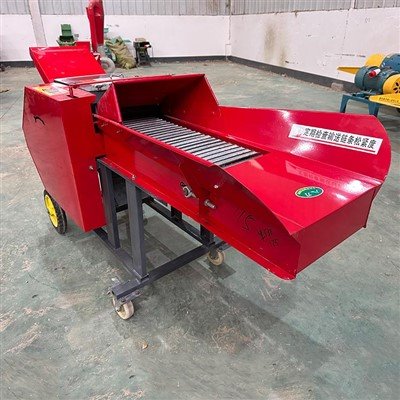
If you’re ready to stop guessing and start saving, reach out to discuss your specific branch volume needs, test our machines on your site, and get a custom quote tailored to your workload.
Chaff Cutter References
ASABE Standards. (2021). Test Procedure for Measuring Volume Reduction Ratio of Wood Chippers and Shredders. American Society of Agricultural and Biological Engineers.
Landscape Industry Association. (2022). 2022 Cost and Benchmark Report for Tree Care and Landscaping Operations.
U.S. Environmental Protection Agency. (2021). Sustainable Materials Management: Tipping Cost Benchmarks for Municipal and Commercial Organic Debris.
Woody Waste Management Association. (2020). Heavy-Duty Shredder Operational Efficiency for Commercial Landscaping and Tree Service Operations.
Zhengzhou Xinyihaotong Machinery Manufacturing Co., Ltd.
As one of the most professional branch shredder manufacturers in China, we also support custom service. We warmly welcome you to buy high quality branch shredder for sale here from our factory. For price consultation, contact us.
Address: Rooms 2301–2312, Jiayi Building, Xinxiang City, Henan Province, China
E-mail: zhaoyixuan5566@gmail.com
WebSite: https://www.xyhtmachinery.com/
