If you’ve ever ordered a curated gift box for a client, a wedding party, or a personal celebration, you’ve probably glanced at the price tag and wondered why a simple-looking box costs more than a regular shipping box. As someone who’s run a gift box supply business for seven years, I get those questions all the time. It’s not a mark-up trick or an arbitrary number—every part of a gift box’s price ties back to small, intentional choices that add up to a product that feels personal, reliable, and worth the investment. Let’s break down exactly how we arrive at a cost that makes sense for both of us. Gift Box
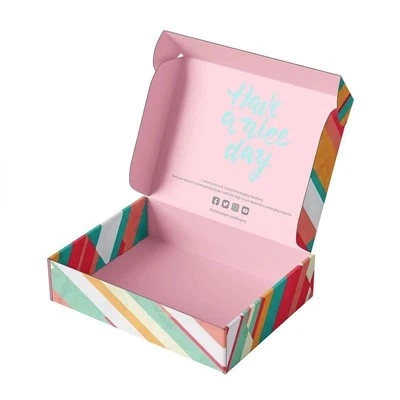
First, start with the box itself, and that’s not just the cardboard container. A lot of people assume gift boxes are the same as standard packaging boxes, but they’re not. We source two main types of stock, depending on what a client needs: corrugated cardboard for durable, shippable boxes, and rigid paperboard for the sleek, unboxing moments people love. Corrugated stock runs $0.15 to $0.60 per unit, depending on thickness—thicker 200#ECT board is better for heavy items like bottles or custom snacks, while lighter 125# works for smaller, lightweight boxes. Rigid stock is pricier, usually $0.75 to $2.25 per unit, because it needs to hold its shape without bending, which is key for premium gifting.
Then there’s printing and finishing, the details that make a box feel intentional, not plain. Basic single-color print is the cheapest, around $0.20 per unit, but full-color, high-resolution logos or patterns add $0.30 to $0.90 more. If a client wants a specialty finish—matte lamination, gloss coating, foil stamping, or embossing—that’s where costs jump: foil stamping alone can add $0.50 to $1.50 per box, and embossing is another $0.40 to $1.25. For a small run of 50 custom boxes, that might mean $1 to $3 total for the finishing, but for 10,000 units, economies of scale bring that down to 10 to 20 cents per unit. I’ve seen clients cut costs by skipping fancy finishes for bulk orders, keeping print simple, so that’s a big variable.
Next, add in the packing materials and inserts, the parts most people don’t see but that are critical to a good unboxing experience. A box isn’t just a container; it needs to hold products securely so nothing breaks during shipping or storage. We use things like crinkle cut paper, tissue paper, foam inserts, or custom die-cut inserts for smaller items. Crinkle paper is cheap, $0.10 to $0.30 per box, but custom die-cut inserts—designed specifically to fit a client’s products like a custom mug, notebook, or skincare set—cost $0.50 to $2.50 per unit, depending on complexity. For example, a die-cut insert for a 10-piece tea set will cost more than one for a single lip balm. We also use glue, hinges, and any closures—magnets, ribbon, Velcro, or magnetic snaps—and those add another $0.10 to $0.50 per box, depending on quality. A cheap glue might fail after a few uses, so we stick to industrial-grade to avoid returns, and that’s a small but necessary cost.
Then there’s product curation, if a client is ordering pre-assembled gift boxes instead of empty ones. This is where a lot of the real work happens, and why a box can cost more than the products inside. Curators don’t just throw random items in a box; we research suppliers, negotiate bulk prices, vet product quality, and test for compatibility. For example, a client ordering 100 client thank-you boxes might curate local snacks, a branded notebook, and a reusable water bottle. The products might cost $5 each, but the curation, assembly, and quality checks add $2 to $4 per box, bringing that total to $7 to $9. That doesn’t include labor, either—assembly is a big part of the cost.
Labor is a line item people rarely think about, but it’s non-negotiable. Assembling gift boxes isn’t like slapping a label on a shipping box. Each box needs to be folded, printed, finished, inspected, packed, and shipped out. For small runs (less than 100 units), labor costs add $2 to $5 per box because it’s hand-assembled. For bulk runs (over 1,000 units), we use automated folding and packaging machines, which cuts labor to $0.50 to $1.50 per unit. I always tell clients that if a quote seems too low, it’s probably because someone is cutting corners on labor—either rushing assembly, skipping quality checks, or using underpaid workers, which leads to damaged boxes and frustrated customers.
Then there’s shipping and overhead. The cost to get the box to your warehouse or your customer’s address depends on size, weight, and distance. A small rigid box might ship for $1 to $2 per unit domestically, while a larger corrugated box with heavy products can be $3 to $5. Overhead includes rent for our warehouse, software for order tracking, insurance, and the cost to replace damaged inventory. For small runs, overhead adds $0.50 to $1 per box, and for bulk runs, that’s spread out, so it’s usually $0.10 to $0.20 per unit.
So let’s put this all together with examples, because numbers mean nothing without context. If a client orders 50 empty basic corrugated boxes, no printing, just blank, that’s $0.15 (box) + $0.10 (crinkle paper) + $0.15 (labor) + $0.20 (overhead) = $0.60 per box. That’s a basic shipping box, no frills. Now, if a client orders 100 custom rigid boxes with full-color print, gold foil stamping, and a custom die-cut insert, that’s $1.50 (rigid box) + $0.70 (printing/foil) + $1.20 (die cut) + $3 (curated products) + $1.50 (labor) + $0.50 (overhead) = $8.40 per box. For 1,000 of those same boxes, the numbers drop: $1.20 (box) + $0.50 (printing/foil) + $0.80 (die cut) + $2.50 (curated products) + $0.80 (labor) + $0.20 (overhead) = $5.80 per box. That’s economies of scale working, which is why bulk orders always cost less per unit.
I’ve had clients come to me thinking they can get a custom gift box for $2, and when I explain that even the cheapest materials and labor add up, they’re surprised. But I’d never lowball a client with a price that can’t cover quality. Last year, a small business owner ordered 200 branded boxes for her retail customers. She tried a cheaper supplier first, and 30% of the boxes arrived bent, with smudged print, and the closures broke when customers opened them. She had to refund $1,200 to customers and reorder from us. That cost her twice as much as if she’d chosen the right supplier upfront. Quality isn’t just a nice-to-have—it’s part of the price.
Another factor is customization complexity. A simple box with a logo is one thing, but a box with a unique shape, specialty inserts, or a custom exterior design takes more time and resources. For example, a hexagonal box for a luxury candle brand requires custom dies for cutting, which add a one-time tooling cost of $500 to $1,000, depending on the shape. That tooling cost is spread across the number of units ordered, so for 500 boxes, that’s $1 to $2 per box in tooling, and for 5,000 boxes, that’s $0.10 to $0.20 per box. If you’re ordering a custom shape, that’s a cost you have to account for, and it’s non-refundable once the die is made, because it’s custom to your design.
I also work with a lot of nonprofits and small businesses on tight budgets, so I’ve developed ways to adjust costs without sacrificing quality. For example, we use recycled cardboard for boxes, which is 10 to 15% cheaper than virgin stock, and we use plain tissue paper instead of printed when budget is tight. For clients who don’t need pre-assembled boxes, we send them flat, so they save on shipping and labor when they assemble them in-house. That flexibility is part of what makes gift box supply different from generic packaging—we don’t do one-size-fits-all pricing.
At the end of the day, a gift box’s cost isn’t just for the materials—it’s for the experience. When a customer opens a gift box and feels cared for, that’s because of the choices we make: the thickness of the box so it doesn’t crush during shipping, the texture of the paper so it feels premium, the placement of each item so it’s easy to find. All of that adds up, and it’s worth it to get right.
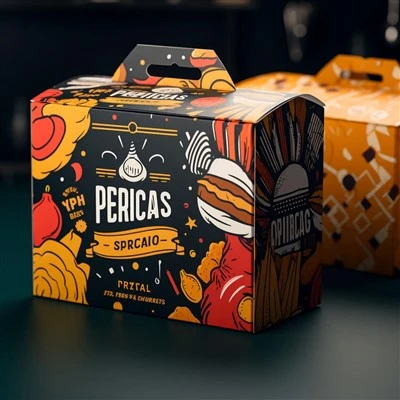
If you’re ordering gift boxes for an upcoming campaign, wedding, or client thank-you, I’m here to walk through your needs and build a quote that makes sense for you. We can talk about run sizes, customization options, and ways to adjust to fit your budget without cutting corners. Reach out to me to discuss your project details.
Disposable Cups References:
- The Packaging Association. (2022). "Cost Drivers in Custom Packaging for Promotional Goods." Retrieved from industry packaging studies.
- Small Business Administration. (2023). "Pricing Strategies for Custom Manufacturing and Assembly Services." Retrieved from small business operations resources.
- Sustainable Packaging Coalition. (2021). "Material Cost Comparisons for Rigid and Corrugated Packaging Solutions." Retrieved from sustainable packaging material databases.
Yiwu Jieshi Packing Products Co., Ltd.
We are one of the most experienced gift box manufacturers and suppliers in China. With a professional production team, we offer a wide range of paper packaging with superior quality. Please feel free to wholesale bulk premium gift box at competitive price from our factory.
Address: Floor 4, Building 2, No.1, Kuangqian 1st Road, Yiting Town, Yiwu, Zhejiang, P.R. China
E-mail: debby@jieshiprint.com
WebSite: https://www.jespackage.com/
