Hey there, fellow camping enthusiasts! I’m a supplier of vacuum compression bags, and I often get asked this question: "Will a vacuum compression bag affect the insulation of a sleeping bag?" Today, I’m gonna dive deep into this topic and share what I’ve learned over the years. Vacuum Compression Bag
Let’s start by understanding how a sleeping bag works. A good sleeping bag is all about trapping air. The insulation materials in the sleeping bag, like down or synthetic fibers, create tiny pockets of air. These air pockets act as a barrier, preventing the heat from your body from escaping to the cold environment outside. The more air trapped, the better the insulation.
Now, let’s talk about vacuum compression bags. These bags are amazing. They use a vacuum to suck out the air from inside, reducing the volume of the sleeping bag significantly. This makes it much easier to carry and store your sleeping bag. But here’s the big question: does squeezing all that air out harm the insulation?
First off, it’s important to know that different types of insulation materials react differently to compression.
Down Insulation
Down is a popular choice for sleeping bags because it’s incredibly lightweight and has excellent insulation properties. But it’s also quite delicate. When you compress a down sleeping bag in a vacuum compression bag, you’re essentially squishing those air – trapping feathers together.
In the short term, compressing a down sleeping bag won’t have a huge impact on its insulation. Once you take the sleeping bag out of the compression bag and let it fluff up, the down feathers will start to regain their shape and trap air again. However, if you leave the down sleeping bag compressed for a long time, say months or even years, it can cause some problems.
The down feathers can start to lose their loft, which means they won’t be able to trap as much air. This can lead to a decrease in the insulation quality of the sleeping bag. But don’t worry too much. If you only compress your down sleeping bag for a short period, like during a camping trip or for a few weeks of storage, it should bounce back just fine.
Synthetic Insulation
Synthetic insulation is a bit more robust compared to down. Materials like polyester fibers are designed to be resilient. When you compress a synthetic – insulated sleeping bag in a vacuum compression bag, the fibers can withstand the pressure better.
Synthetic insulation usually recovers its shape quickly after being taken out of the compression bag. Even if you keep it compressed for a relatively long time, the insulation performance won’t degrade as much as it would with down. This is because synthetic fibers are less likely to lose their structure under compression.
So, what’s the bottom line? Can you use a vacuum compression bag with your sleeping bag without worrying about the insulation?
Well, it depends. If you’re using a down sleeping bag, it’s best to limit the time it spends in the compression bag. Use it for short – term storage or during trips, and make sure to let the sleeping bag fluff up fully before using it. For synthetic – insulated sleeping bags, you have a bit more leeway. You can keep them compressed for longer periods without too much concern.
Another thing to keep in mind is how you store your sleeping bag in the compression bag. Make sure to fold the sleeping bag neatly before putting it in. Avoid stuffing it in haphazardly, as this can damage the insulation materials.
Now, I know some of you might be thinking, "But how do I know if my sleeping bag is still insulated well after using a compression bag?" There are a few signs to look out for. If you feel colder than usual in your sleeping bag, or if it takes longer for you to warm up, it could be a sign that the insulation has been affected. You can also check the loft of the sleeping bag. A well – insulated sleeping bag should be fluffy and have a lot of volume. If it looks flat and deflated even after fluffing it up, there might be an issue.
As a vacuum compression bag supplier, I’m always looking for ways to make our products better. We’ve been researching and developing compression bags that are gentle on different types of insulation. Our bags are designed to evenly distribute the pressure, reducing the risk of damage to the sleeping bag’s insulation.
If you’re in the market for a high – quality vacuum compression bag for your sleeping bag, you should definitely consider ours. We offer a wide range of sizes and styles to suit your needs. Whether you’re a casual camper or a hardcore outdoor enthusiast, we’ve got you covered.
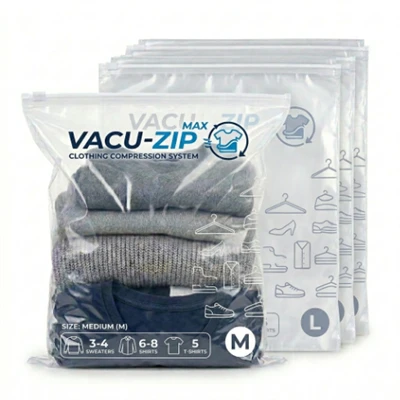
Using a vacuum compression bag can be a great way to save space and make your camping gear more portable. Just be aware of how it might affect the insulation of your sleeping bag, especially if it’s a down – filled one. By following the tips I’ve shared, you can enjoy the benefits of compression without sacrificing the warmth and comfort of your sleeping bag.
Vacuum Compression Bag If you have any questions or if you’re interested in purchasing our vacuum compression bags, don’t hesitate to reach out. We’re always happy to help you find the right product for your needs.
References
- Ultralight Backpacking Tips, "How Compression Affects Sleeping Bag Insulation", 2022
- The Camping Journal, "The Impact of Vacuum Compression on Sleeping Bag Performance", 2023
- Outdoor Gear Review, "Comparing Down and Synthetic Insulation under Compression", 2021
Shanghai Ruiyue Plastic Products Co., Ltd.
With abundant experience, we are one of the most professional vacuum compression bag manufacturers and suppliers in China. We warmly welcome you to buy high quality vacuum compression bag in stock here from our factory. If you have any enquiry about customized service, please feel free to email us.
Address: No. 1000, Lixue Road, Malu Town, Jiading District, Shanghai
E-mail: shenyang.boss@ruiyueplastics.com
WebSite: https://www.ruiyueplastics.com/
