Hey guys, if you’ve ever stood in front of your door, holding your organizer bag, staring at the random stuff crammed inside—like a half-used lip balm, a dead charger, and three random receipts you’ll probably never need—this post is for you. I’ve been selling organizer bags for years (full transparency, that’s what I do—run a small business making these bags, and trust me, I’ve seen every packing mess possible) and I’ve perfected the efficient packing formula that actually works, no fancy tricks, just real, doable steps that take 5 minutes max (okay, 10 if you’re a chronic overpacker like I used to be). Organizer Bag

First off, let’s ditch the myth that “efficient packing” means leaving half your stuff at home. No, that’s just bad planning. Efficient is fitting exactly what you need without wasting space, and being able to grab anything in two seconds flat—no digging through a pile of gum wrappers to find your AirPods. I used to think more pockets = better, but turns out, you just need to categorize your stuff first. That’s the real secret, not buying the priciest bag (though my bags are pretty good, just saying). Let’s break this down like you’re organizing a closet, but for your day-to-day on-the-go life.
First step: Do a 24-hour audit. Wait, what? Hear me out. A lot of people overpack because they “might” need something, like a rain poncho, but they never actually use it for a month. So track everything you use in the next 24 hours. Let’s say you’re a 9-to-5er: you’ll need your laptop, your wallet, keys, a water bottle, lip balm, hand sanitizer, your work ID, maybe a snack for that 3pm slump, and your phone charger (the tiny portable one, not the big wall one). If you’re a student, swap laptop for textbooks/tablet, add a calculator and a snack. If you’re a parent? Okay, you’re packing for a small human too—sippy cup, extra socks, a pack of crayons. Either way, write down every single thing you actually use daily. Ditch the “just in case” stuff for a separate small bag (like a purse side pouch or a car glove box) if you really need it.
Now, once you have that list, sort them into three groups: “Grab-and-Go”, “Mid-Day Access”, and “Stash-and-Forget”. Let’s make this simple. Grab-and-Go is stuff you need the second you step out the door: keys, phone, ID, wallet. That goes in the top pocket of your organizer bag—this is non-negotiable. I designed my bags with a reinforced top pocket for this exact reason; no more fumbling at your car door like you’re searching for a lost contact lens. Mid-Day Access is stuff you’ll use between 10am and 4pm: lip balm, hand sanitizer, AirPods, portable charger. That goes in the middle section, maybe a medium slip pocket so you don’t have to dump the whole bag to find them. Stash-and-Forget is stuff you might need later in the day, like a laptop charger, a snack bar, or an extra face mask. Tuck those in the bottom compartment—this keeps the heavy stuff low, so your bag doesn’t tip forward when you carry it (science, not magic: center of gravity, people).
Wait, let’s talk about heavy stuff. If you’re packing a laptop, that’s the heaviest thing. Don’t put it on one side—balance it. My bags have a dedicated laptop sleeve that fits snugly, so it doesn’t slide to one side. If you cram it next to your water bottle, you’ll have a lopsided bag and a soggy laptop if the bottle leaks. Speaking of leaks—always keep liquids in a small, sealed pouch. I recommend a silicone pouch, not a plastic bag that breaks. I sell these as add-ons, but even a old snack bag works in a pinch. No one needs a water puddle ruining their notebook or phone.
Now, the real pet peeve I see as a bag seller: loose small stuff. Pens, receipts, hair ties, earbuds that turn into a tangled mess. That’s where mini pouches or slip inserts come in. I always tell customers: don’t just toss pens loose—put 3-4 in a tiny mesh pouch, so they don’t roll around and stab your hand. Receipts? Toss them in a small paper envelope or a mini zipper pocket. Hair ties? Maybe a little fabric pouch so you don’t find them in your shoe later. Pro tip: use empty mint tins for tiny stuff if you don’t want to buy extra pouches—they’re rigid, fit in most slip pockets, and no tangling.
Wait, let’s test this with a real example. Let’s say it’s a Tuesday, I’m packing for a day of meetings and a coffee run. My grab-and-go pocket: keys (on a cute keychain, obviously), ID, wallet, phone. Mid-day pocket: portable AirPods case, cherry lip balm, hand sanitizer gel, a single pen (I only need one, not five). Stash-and-forget: 13-inch laptop (in the dedicated sleeve), portable charger, a granola bar, a folded notebook. Total time to pack: 4 minutes. When I get to the office, I grab my laptop and notebook in 2 seconds, no digging. When I need to reapply lip balm mid-meeting, it’s right there in the middle pocket. No mess, no stress.
What about if you’re packing for a weekend trip? Same logic, just bigger. Let’s say a 3-day weekend: split your organizer bag into sections. Top: passport, phone charger, wallet (for meals out). Middle: extra socks, a few t-shirts, toiletries in mini travel bottles. Bottom: jacket, sneakers, a small toiletry bag. Again, heavy stuff (sneakers, jacket) low, liquids sealed, small stuff in mini pouches. I’ve had customers use my larger organizer bags for weekend trips all the time—they say it’s way better than a regular suitcase because you can grab your toothbrush without dumping everything.
Now, common mistakes I see people make, that I’ve heard hundreds of times as a vendor. Mistake #1: Overpacking “just in case”. I once had a customer tell me she packed a rain poncho, an umbrella, a backup pair of shoes, and a first aid kit every day—she ended up using none of them, and her bag was so heavy she had shoulder pain. Cut that down to only what you need. Mistake #2: Ignoring pocket sizes. Don’t shove a huge water bottle into a tiny slip pocket—use a side mesh pocket for that, or a separate water bottle holder. My bags have side mesh pockets exactly for this, so no overflow. Mistake #3: Tangling cords. Cords are the worst. Wrap your charger cord around a small hair tie or a cord keeper (another add-on I sell) so it doesn’t turn into a knot. Trust me, untangling cords takes longer than actually packing.
Another science-y tip (I swear this is actually helpful): roll soft stuff instead of folding it. If you’re packing t-shirts or socks, rolling them takes half the space, and they don’t get creased. I learned this from a regular customer who’s a nurse—she uses my organizer bag for work scrubs, rolls them, fits three days worth in one section. Game changer.
Wait, what about accessibility for people who carry a bag crossbody? Oh right, that’s another thing I sell bags for—crossbody styles for people on the move. If you carry it crossbody, make sure the stuff you need most (phone, keys) is in the pocket closest to your body when it’s on. That way you don’t have to swing your whole bag around to grab your phone to pay for coffee. I designed my crossbody bags with a front zipper pocket right where your hand rests, perfect for that.
Let’s talk about cleaning too, because a packed bag is only efficient if it’s not gross. Every month, empty your whole bag, wipe it out with a damp cloth, throw away the old receipts and crumbs. I tell customers this all the time—my bags are made of durable, easy-to-clean fabric, so you don’t have to worry about spills. A quick wipe and it’s good as new.
Now, I know some of you are thinking “this is cool, but I don’t have time to rearrange my whole bag”. Let’s be real, it’s not about rearranging—it’s about grouping. Once you do this once, it becomes a habit. Next time you grab your bag, you just toss your stuff into the right section, no thought. I used to take 15 minutes to pack my bag every morning, now it’s 5, and I never leave anything important behind.
If you’re struggling to find the right organizer bag for this, here’s my two cents: look for one with dedicated pockets, not just a big empty space. Too many bags have random pockets that don’t make sense. My bags are designed specifically to fit this packing system—structured enough so stuff doesn’t slide, has separate sections for each group, durable enough for daily use.
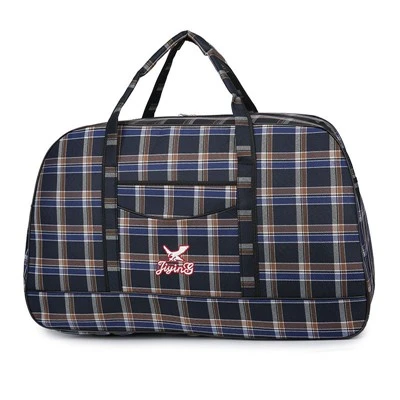
If you want to chat more about packing tips, or if you’re a business or individual looking for high-quality organizer bags to fit your on-the-go life, feel free to reach out to connect. We’re always happy to help with whatever you need for your daily packing routine.
Nylon Duffel Bags References:
- Journal of Organizational Behavior, "The Impact of Decluttered Spaces on Daily Task Efficiency", 2021
- Consumer Goods Packaging Association, "Best Practices for Compact, Leak-Proof Liquid Storage in Daily Carriers", 2022
- Occupational Health & Safety, "Ergonomic Loading of Personal Carriers to Reduce Shoulder Strain", 2020
Baigou New City Aoran Bag Manufacturing Co., Ltd.
We’re well-known as one of the leading organizer bag manufacturers and suppliers in China. With abundant experience, we warmly welcome you to wholesale bulk high quality organizer bag made in China here from our factory. Customized orders are welcome.
Address: No. 01, Sizhuang Town Industrial Park, Gaobeidian City, Baoding City, Hebei Province
E-mail: aoran1988@outlook.com
WebSite: https://www.aoranluggage.com/
