
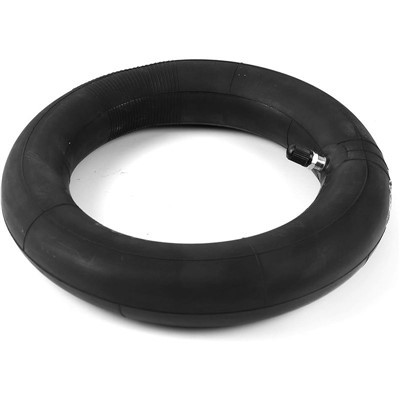
E-Bike Inner Tube Hey everyone, if you’ve ever stared at a motorcycle inner tube on our shelves and wondered why there’s a separate front and rear one, you’re not alone. I get questions about this all the time, ever since I started running our motorcycle tube supply business—folks think tubes are just tubes, right? Spoiler: nope, there’s actually a lot going on behind the scenes that makes front and rear tubes totally different, and picking the wrong one could leave you stranded mid-ride. Let’s break this down like we’re chatting over a post-ride beer, no boring engineering jargon that makes your eyes cross. First off, let’s keep it real: we’ve all replaced a flat before, and grabbing the wrong tube isn’t just annoying—it’s a safety thing. When I’m talking to a customer over the phone, the first question I ask is “front or rear?” and half the time they go “uh, both the same, right?” Uh-huh, that’s what I thought last year when a guy brought back a rear tube he’d mounted on his front wheel, complained it leaked like a sieve. Turned out the valve stem was way too short, and the tube got crimped between the rim and the tire when he aired it up. Oops, that’s the kind of mistake we’re trying to avoid, especially when you’re out on twisty back roads or hauling gear to a camp spot. Let’s start with the biggest difference: size and dimensions. Wait, it’s not just diameter and length—though that’s part of it. Rear tubes are built for way more weight, duh. The back end of a bike is where the engine, gas tank, and whatever cargo you’re hauling sits, so that wheel takes like 60-70% of the total bike’s weight. Front wheel? It’s mostly steering, so it carries way less, like 30-40% max. So rear tubes have thicker rubber walls—think of it like comparing a heavy-duty work boot vs. a running shoe. We stock our rear tubes with 1.5mm sidewalls vs. 1.2mm on fronts, and that’s not overkill—when you’re loaded down with camping gear and hammering on back roads, that extra thickness stops punctures from gravel and debris way better. Then there’s the bead shape and valve stem length. Bead is the part that sits inside the rim lock, right? Rear tubes have a bead that’s designed to sit tighter because the wheel spins with more torque. Wait, torque is just the twist from the engine, right? So when you’re accelerating hard from a stop, the rear wheel twists way more than the front, so the tube’s bead can’t slip. Front tubes have a looser bead because there’s less twist there, so they don’t need that tight fit. Oh, and valve stem length is a huge one. I can’t tell you how many customers mix this up. Front wheels usually have narrower rims, or sometimes the brake caliper is in the way, so the valve stem needs to be shorter to not hit the brake parts. Rear wheels? More space, but wait—sometimes when you’re using a tubeless-ready rim and switching to a tube, the rear might need a longer stem to reach the air valve on the rim. Not all the time, but it’s way more common than on fronts. Last month we had a guy with a sport bike who mounted a front tube on his rear, and the stem was so short he couldn’t get an air chuck on it without fighting the brake. Total waste of time, and he was one of those guys who “knows everything” about bikes, so that stuck with me. Now, let’s talk about pressure ratings, which is a big one people sleep on. Tubes aren’t made for the same PSI (pounds per square inch). Rear wheels are under more load, so they need higher pressure to support that weight without squishing the tire too much. If you run a rear tube at front pressure, the tire will flatten out more, which means more friction, worse fuel mileage, and higher chance of a pinch flat if you hit a pothole. Front tubes are rated for lower PSI because they don’t carry as much weight, and the front tire needs a little give for steering—if you run front pressure on the rear, it’ll feel rock solid, like riding a cinder block, and you might get a wobble at high speeds. I always tell new riders to check their bike’s manual first, but our tubes have the pressure rating printed right on the box, so you don’t have to hunt. And for heavier bikes—like adventure bikes, cruisers with big engines, or bikes with saddlebags—we even stock heavy-duty rear tubes, like 2mm sidewalls, for when you’re hauling 100+ pounds of gear. Those are the ones we push the most at our trade shows, because adventure riders deal with tons of rough terrain where a flat mid-trail is a disaster. Wait, another thing: valve stem type. A lot of rear tubes use a metal core stem, while fronts often use rubber cores? No, wait, let me get that right—no, actually, both can be either, but rear stems might have a reinforced base to handle the constant flex. The rear tube moves more when the wheel spins, especially under load, so the base of the stem can crack if it’s not reinforced. Front stems don’t flex as much, so they can be lighter, which saves a tiny bit of unsprung weight—unsprung weight is the weight that’s not on the frame, right? So every little bit helps for sport bikes that want to be fast. Oh, that’s a good point—weight. Rear tubes are a bit heavier because of the thicker rubber, but since the front doesn’t have to deal with that torque and load, we can make front tubes a bit lighter, which is why some performance riders swap to lighter front tubes to save on unsprung weight for better handling. But for regular riders who just commute or ride on weekends, that’s not a huge deal—what matters is not getting a flat that leaves you stranded. Let’s talk about common mistakes I see all the time. Last summer, a guy came in with a flat on his Harley, grabbed a tube, mounted it himself, and called me an hour later panicking because it kept losing air. Turns out he used a front tube on the rear. The PSI was too low, so the tube was stretching too much and seeping air through the stem. We swapped it for a rear tube, and he was good to go, but he said he would’ve been stuck on the side of the highway for hours. Another one: a mountain biker tried to use a bike tube (wait, no, motorcycle tubes—different, but still) no, wait, a dirt bike rider mixed up front and rear tubes on his dual-sport, and the rear tube blew out halfway through a trail ride. Why? Because dirt bikes have way more torque, so the rear tube needs to handle that twist, and the front is lighter for when you’re landing jumps. That’s a big one—dirt bike riders especially can’t mess this up, because a rear blowout on a jump is dangerous, like face-plant into the dirt dangerous. Now, let’s get into how we build our tubes to make them different, since we’re the supplier here. We source our rubber from a local manufacturer that’s been in the business for 30 years, so we know the quality is good. For rear tubes, we use a higher tensile strength rubber, meaning it can stretch more without breaking, which is perfect for all that load. Front tubes use a more flexible rubber, which is good for the steering movement. We test every batch of tubes—we inflate them to 150 PSI, hold them for 24 hours, check for leaks, and for rear tubes, we torque them to simulate engine twist, to make sure they don’t slip. I did a demo at a local bike shop last month, where I mounted a front and rear tube, aired them up, and sat on both wheels to show the difference. The rear tube barely squished, the front one squished a little more. That’s exactly what you feel when you ride—rear feels firm, front feels a bit softer. What about tubeless conversions? Wait, a lot of riders are switching to tubeless now, but they still use tubes sometimes for off-roading, or if they get a puncture. Even for tubeless setups, if you use a tube, you still need the right front or rear one. Because the pressure and size still matter. I had a customer last year with a Yamaha Tenere, an adventure bike, who did a tubeless conversion, but got a puncture in the desert, so he threw a tube in. Grabbed a front one on accident, and ended up with a wobbly rear wheel because the pressure was wrong. He called me when he got back, and said he learned his lesson, now he keeps a front and rear tube in his saddlebag for emergency. So what do you need to remember when you’re replacing a tube? First, check your bike’s manual. It’ll have the exact size, valve stem length, pressure rating for front and rear. If you don’t have the manual, write down the model year and bike model, and when you come to us, tell us if it’s front or rear, and we’ll get the right one for you. Second, don’t just grab any tube—this isn’t a one-size-fits-all thing. Third, if you’re hauling gear or riding rough terrain, go for a heavy-duty rear tube, it’s worth the extra $10 to not get stranded. Fourth, when you mount a tube, make sure the valve stem is aligned right, and don’t overinflate it—follow the manual’s PSI, not what feels right. I always tell riders: when in doubt, ask. We’ve got a team on the phones and email who can help you get the right tube, no matter what bike you’ve got. Whether you’re riding a 125cc commuter, a 1000cc sport bike, a dirt bike, or an adventure bike, we’ve got front and rear tubes in stock for almost every make and model. We’ve been supplying motorcycle tubes for over 15 years, so we know the difference inside and out, and we’re not just here to sell you a tube—we’re here to make sure you get the right one, so you can ride safely. A lot of riders think motorcycle parts are all the same, but the little things make all the difference. A front tube on the rear doesn’t just work worse—it can be dangerous, leading to blowouts or loss of control. And a rear tube on the front might leave you with a wobbly steering wheel, which is scary at highway speeds. So next time you need a tube, don’t just grab the first one you see. Take 2 minutes to confirm it’s front or rear, and if you’re not sure, hit us up. We’re always here to help, no question is too small. At the end of the day, riding is about freedom, and you don’t want a preventable flat or safety issue ruining your ride. We’ve got your back—front and back, if you will. If you need to replace your tubes, upgrade to heavy-duty, or just have more questions about what’s right for your bike, reach out to us to chat through your needs and get the right tubes for your ride. References: 1. Motorcycle Inner Tube Engineering Basics, Tire Industry Association, 2022 2. Rider Safety Manual: Tire and Tube Maintenance, Motorcycle Safety Foundation, 2021 3. Heavy-Duty Tube Specifications for Adventure and Off-Road Bikes, Dual-Sport Riders Association, 2020 Motorcycle Tube
Jiangxi Vimia Tyre Co., Ltd.
We’re well-known as one of the leading motorcycle tube manufacturers and suppliers in China. We warmly welcome you to wholesale bulk high quality motorcycle tube in stock here from our factory. If you have any enquiry about quotation, please feel free to email us.
Address: Zone C, Industrial Park, Jinxi County, Fuzhou City, Jiangxi Province
E-mail: 17779452635@139.com
WebSite: https://www.cnvimia.com/
