Hey there, this is Jake from the team that’s been supplying communication towers to communities and operators across the country for over a decade. If you’ve ever stared up at a tall, spindly structure on your drive into work or noticed a cluster of them dotting the edge of a small town, you’ve probably wondered what those things actually are—and why there are so many different shapes and sizes. Today, I’m breaking down the main types of communication towers we work with, and a little about why picking the right one matters for your project. Communication Tower
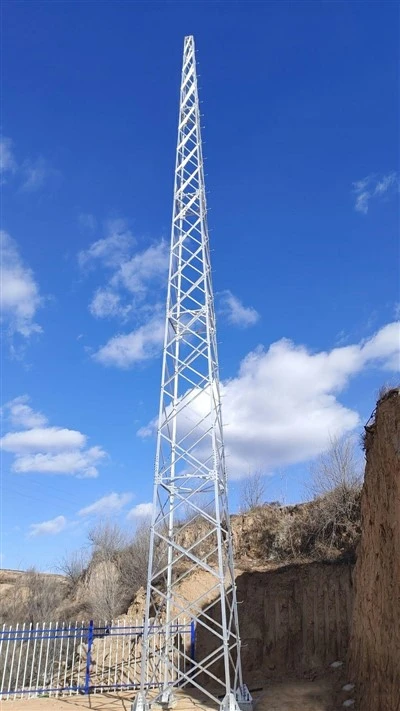
Let’s start with the most common one you’ll see almost anywhere: the lattice tower. These are the tall, crisscrossed metal frames that look like giant Erector Sets stretched hundreds of feet into the air. We install a ton of these, and for good reason—they’re super sturdy, versatile, and cost-effective for most long-range communication needs. Lattice towers work by spreading wind and structural stress across their entire framework, which makes them perfect for areas that get heavy wind, snow, or even ice. They come in two main varieties: self-supporting and guyed. Self-supporting lattice towers stand on their own four legs, so they don’t need extra cables to stay upright. That’s why you’ll see them in urban areas or small parcels of land where space is tight—you don’t have to clear a huge perimeter for guy wires. Guyed lattice towers, on the other hand, use thick steel cables anchored deep into the ground around the base to hold them steady. These are the ones you’ll see in rural areas, often towering over farmland, because they can reach greater heights (sometimes over 2,000 feet) without needing a massive, heavy frame. We recently wrapped up a project in a remote mountain county where the only line of sight for their 5G network was at the peak of a ridge, and a guyed lattice tower was the only option that fit their budget and coverage needs.
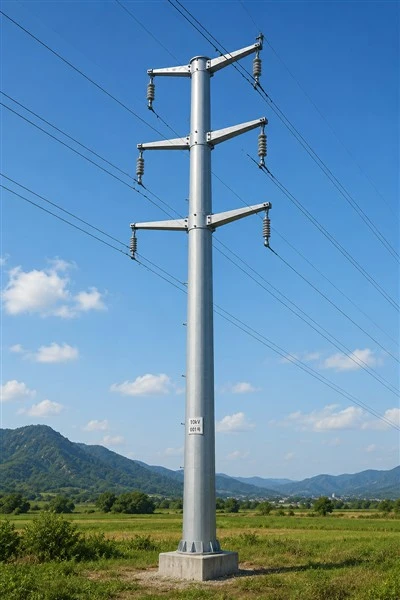
Next up, monopole towers—these are the sleek, single, pole-like structures that are way less obtrusive than lattice towers. If you’ve ever driven through a suburban neighborhood and spotted a tall, smooth steel pole painted to match nearby utility poles or even camouflaged to look like a pine tree, that’s a monopole. We love installing these for urban and residential areas because they take up way less space than lattice towers, and they’re much easier on the eyes. Monopoles are typically 100 to 300 feet tall, and they’re self-supporting, so they don’t need guy wires. The tradeoff? They’re not quite as strong as lattice towers, so we usually only recommend them for smaller loads—like small cell networks, public Wi-Fi, or cellular service for dense suburban areas. We did a project last year for a city that wanted to upgrade their downtown Wi-Fi coverage, and they didn’t want giant eyesores ruining their historic district. We camouflaged four monopoles to look like oak trees, and now they blend in perfectly while covering every park and sidewalk in the downtown core.
Then there’s the guyed mast, which is shorter and more slender than a guyed lattice tower. Think of it as a thin, tall pole that’s held up by guy wires, instead of a crisscrossed frame. Guyed masts are usually under 1,000 feet tall, and they’re ideal for areas where you need a tall structure but don’t have a huge budget for a full lattice tower. They’re lightweight and easy to transport, which makes them a good fit for temporary deployations too—like for a concert, a disaster recovery site, or a sports event that needs extra temporary communication support. We recently worked on a temporary setup for a hurricane recovery in the Gulf Coast, and we used 12 guyed masts to set up emergency cellular service for a small community that lost their main tower. They were easy to haul in on trucks, and we had them up and running in less than a week.
Another type we work with regularly is the stealth tower, and this is one that’s been growing in demand over the last few years. Stealth towers are designed to blend into their surroundings so they don’t stand out. We’ve mentioned camouflaged monopoles that look like trees, but stealth towers can also look like flagpoles, church steeples, water towers, or even building-mounted equipment. A lot of cities and residential communities have strict zoning laws that limit the height and appearance of communication structures, so stealth towers are the solution. Last year, we installed a stealth tower disguised as a water tank on the roof of a hospital—they needed better cellular coverage for emergency rooms, but the hospital was in a dense urban area with strict zoning. We modified an existing water tank frame to hold all the communication equipment, and it’s been a total win: no zoning pushback, and great coverage.
Let’s not forget about building-mounted towers, which are exactly what they sound like—structures that attach to the roof or side of a building to hold communication equipment. These are perfect for urban areas where there’s no space to put a ground-based tower, and they’re usually smaller, under 200 feet tall. Building-mounted towers come in a few forms: rooftop monopoles, rooftop antenna arrays, and even smaller “stealth” units that look like HVAC equipment. The key here is making sure the building can support the weight of the equipment and the tower—we always do a structural assessment before installing any of these, because a failed rooftop tower can be dangerous. We recently worked on a office building in Chicago that wanted to upgrade their in-building cellular service for their 10,000 employees. We installed four small rooftop building-mounted units, and they’re now getting perfect service across every floor.
Now, I want to be honest with you—picking the right communication tower isn’t just about picking the type that looks best. You have to consider a few key factors: coverage needs, zoning and local regulations, available space, budget, and even environmental conditions. A lattice tower might be perfect for a rural area with high wind, but it would be overkill and too expensive for a small suburban site. A monopole might be great for downtown, but it wouldn’t reach the 5G coverage needed for a remote mountain town. That’s where our team comes in—we don’t just sell towers; we work with you to figure out exactly what you need, from the initial site assessment to the final installation and maintenance.
Over the years, we’ve seen firsthand how important these towers are. They’re the backbone of our cellular networks, our emergency communication systems, our public Wi-Fi, and even things like smart city infrastructure. When a community loses power after a storm, the first thing they need is a working communication tower to let first responders know where to go. When you stream a show on your phone or video call a family member across the country, that signal is bouncing off a communication tower somewhere. So picking the right one isn’t just a technical decision—it’s a decision that impacts how people connect, stay safe, and do business.
If you’re in the market for a communication tower, whether it’s for a new 5G network, an upgrade to your existing cellular service, a temporary disaster recovery setup, or anything in between, we’re here to help. We’ve worked with small towns, big cities, private operators, and non-profits, and we have the experience to get the job done right. We don’t cut corners on quality, and we always make sure our installations meet all industry safety standards.
We’re ready to walk you through every step: assess your site, recommend the right type of tower, provide a transparent quote, and handle the entire installation process. Don’t hesitate to reach out to our team to start your procurement consultation today. We’re excited to help you build or upgrade the communication infrastructure your community or project needs.
Angle Steel Tower References:
- Federal Communications Commission. (2022). Communications Tower Requirements and Standards. FCC.gov.
- Telecommunications Industry Association. (2021). TIA-222-G Structural Standard for Antenna Supporting Structures and Antennas. TIA.org.
- National Association of Tower Erectors. (2023). Best Practices for Communication Tower Installation and Maintenance. NATE.org.
- Institute of Electrical and Electronics Engineers. (2020). IEEE Standard for Safety Levels With Respect to Human Exposure to Radio Frequency Electromagnetic Fields, 3 kHz to 300 GHz. IEEE.org.
Hunan Zhubang Hongsheng Construction Technology Co., Ltd.
As one of the most professional communication tower manufacturers and suppliers in China, we’re featured by quality products and good price. Welcome to buy high-grade communication tower made in China here and get quotation from our factory. Customized orders are welcome.
Address: Lutang Village, Yong’an Town, Liuyang City, Changsha City, Hunan Province, Hunan Zhubang Hongsheng Construction Technology Co., Ltd.
E-mail: 19898838989@163.com
WebSite: https://www.chinaenerto.com/
